
Cut off the angles
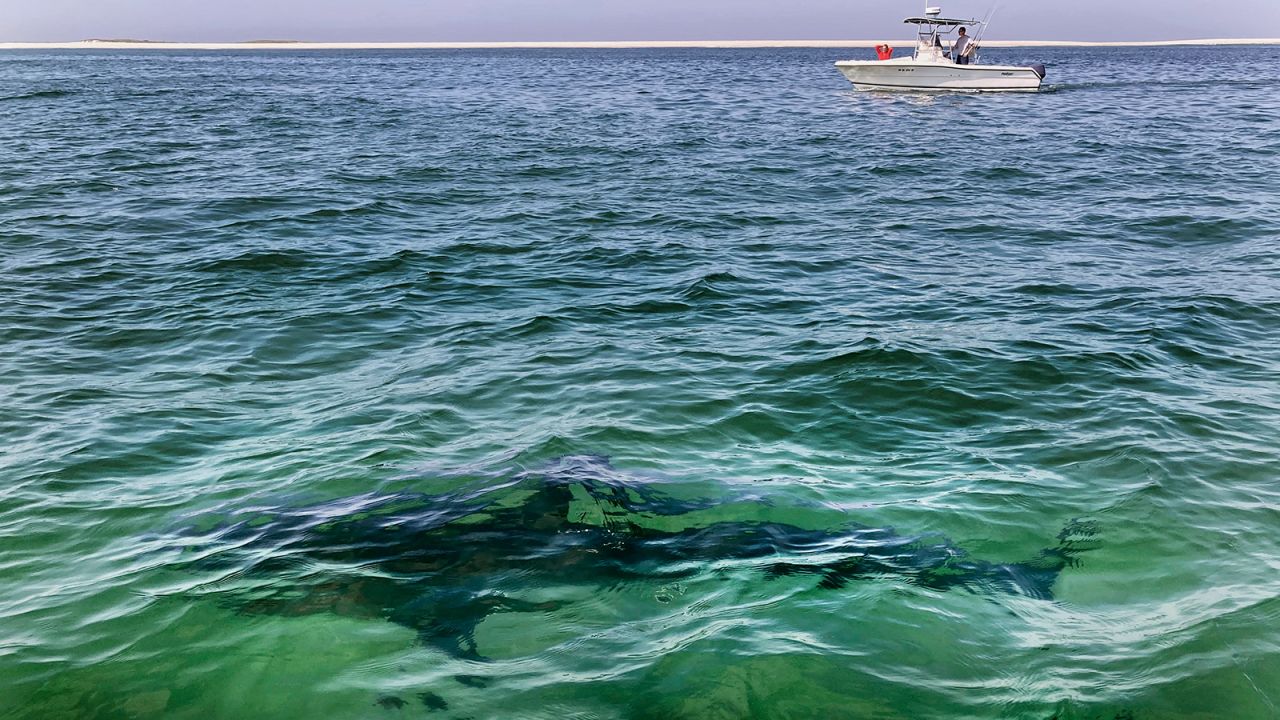
A white shark swims across a sand bar off the coast of Cape Cod, Massachusetts, in August 2021.
If you’re a diver and you run into trouble, try to get into a position where the shark can’t get behind you, says Peirce.
“Keep your back to something like a coral reef. Then you’ve only got one direction to look. You’re protected from behind, for example, and that enables you to keep the shark in sight in front of you and maybe swim to the top of the reef slowly to where your boat is.”
Slowly back away
Displace the least amount of water possible. Try not to thrash and splash around as you gradually swim backwards toward shore.
“You must try and keep the animal in sight and very slowly and gently try and swim backwards and get into shallow water. Again, you’ve got to be careful – large sharks can attack in very shallow depths.”
Doing the above may help to a degree, but Peirce says the likelihood of escaping without injury when a big shark attacks is slim.
“If a white shark is in full attack mode, there’s not much you’re going to be able to do at that point,” he says.

